
Iran has escalated tensions with Europe by declaring the armed forces of European countries “terrorist groups” in retaliation for the European Union’s decision to designate the Islamic Revolutionary Guard Corps (IRGC) as a terrorist organisation.
The declaration was announced on Sunday by the Speaker of Iran’s Parliament, Mohammad Bagher Ghalibaf, during a highly symbolic legislative session in Tehran. Lawmakers, clad in the green uniforms of the IRGC, chanted anti-Western slogans in a show of solidarity with the elite force, according to footage aired on state television.
Ghalibaf described the EU’s action as “irresponsible”, insisting that Iran was merely activating existing domestic legislation. He cited Article 7 of Iran’s 2019 law on countermeasures, which mandates reciprocal action against states that label the Guards a terrorist entity. Under that provision, he said, European armies would now be treated as terrorist groups under Iranian law.
While the political message was unmistakable, the immediate practical implications of the decision remain unclear, particularly in terms of diplomacy, trade and security cooperation.
The parliamentary session coincided with the 47th anniversary of the return from exile of Ayatollah Ruhollah Khomeini, the architect of Iran’s 1979 Islamic Revolution, underscoring the ideological undertone of the move.
The IRGC, regarded as the ideological backbone of Iran’s military establishment, has long been accused by Western governments of suppressing dissent and orchestrating violent crackdowns on protests. Thousands were reportedly killed during recent unrest, allegations Tehran has rejected, blaming the violence on what it calls foreign-sponsored “terrorist acts”, particularly by the United States and Israel.
The EU’s decision to blacklist the Guards aligns with similar measures previously taken by the United States, Canada and Australia. Tehran views the move as part of a broader Western strategy to isolate the Islamic Republic.
Ghalibaf argued that Europe was acting at the behest of Washington and Israel, warning that such alignment would hasten the continent’s “irrelevance in the future world order”. He added that the designation had, paradoxically, strengthened domestic support for the IRGC.
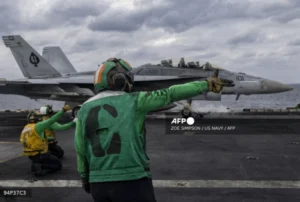
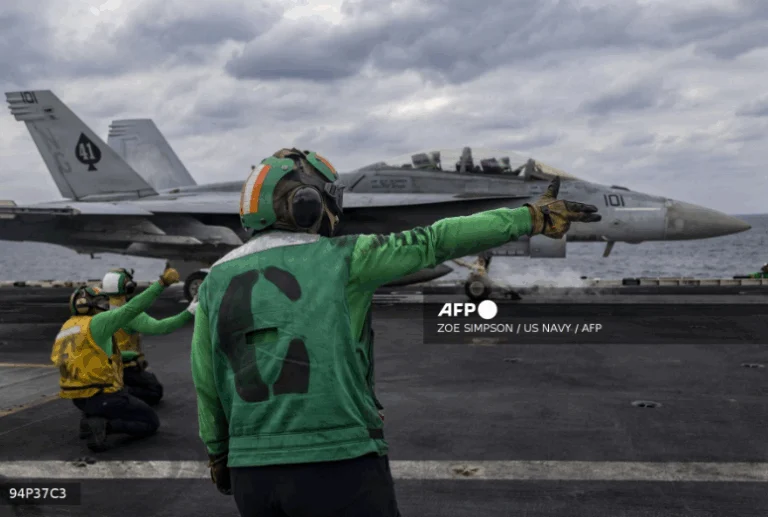
The development comes against the backdrop of rising military and diplomatic tensions between Iran and the United States. Washington recently deployed an aircraft carrier group to the region following threats by President Donald Trump to intervene over Iran’s handling of the protests.
Despite the sabre-rattling, both Tehran and Washington have signalled an openness to dialogue. Iran’s Supreme National Security Council said structural arrangements for negotiations were underway, a claim Trump later confirmed, even as he reiterated that “all options” remained on the table.
Iranian President Masoud Pezeshkian has struck a conciliatory note, warning that war would serve neither Iran, the United States nor the wider Middle East. Qatar and Egypt have also stepped in, with senior officials holding talks in Tehran in an effort to de-escalate the crisis.
For ordinary Iranians, however, the standoff is fuelling anxiety. “All I do now is watch the news until I fall asleep,” said Firouzeh, a 43-year-old homemaker in Tehran. “Sometimes I wake up in the night just to check what has happened.”