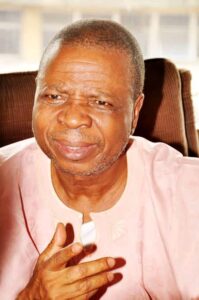
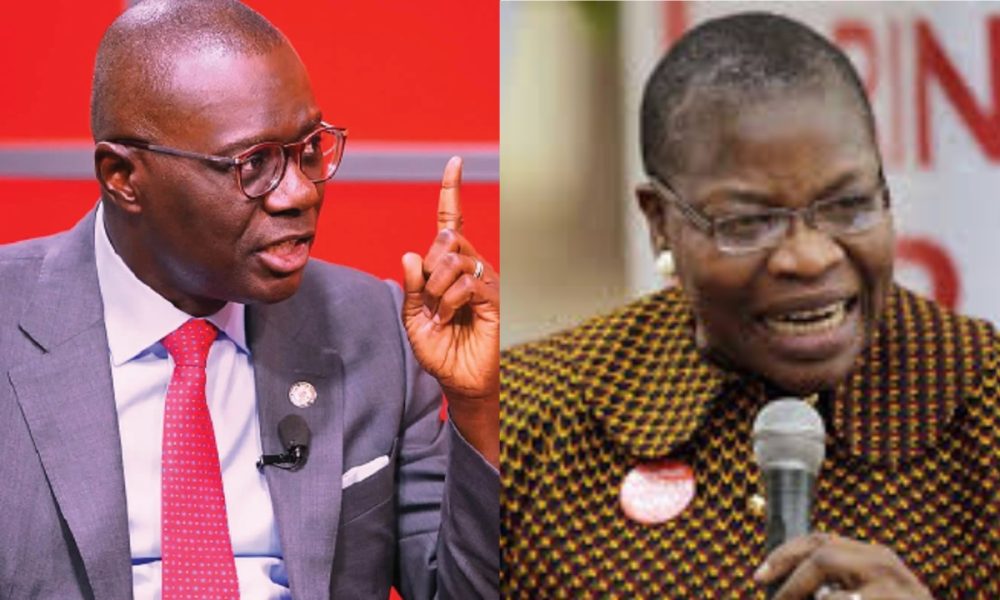

A sharp public disagreement has erupted between Lagos State Governor, Babajide Sanwo-Olu, and former Minister of Education, Mrs Oby Ezekwesili, over the recent demolition exercise in Makoko, with both sides advancing starkly different narratives on legality, motive and human impact.
Ezekwesili has accused the Federal and Lagos State governments of deploying state power in a manner she described as unconstitutional and inhumane, arguing that the exercise reflects a troubling pattern of governance that punishes poverty and sidelines vulnerable citizens.
In a strongly worded memorandum addressed to President Bola Ahmed Tinubu and Governor Sanwo-Olu, the former minister questioned whether Lagos operates as a community of equal citizens or as a space where economic value eclipses human dignity. She further challenged Nigeria’s democratic credentials, asking whether citizenship rights are truly universal or selectively applied based on economic status.
According to Ezekwesili, residents of Makoko are not illegal occupants but Nigerians whose livelihoods—largely centred on fishing, petty trading and informal enterprises—have been repeatedly disrupted by what she termed arbitrary demolitions. She argued that prolonged neglect and recurring displacement have entrenched a governance culture where poverty is treated as justification for exclusion from basic rights.
The founder of the School of Politics, Policy and Governance said the latest demolition contradicted earlier assurances given by Lagos State officials. She maintained that community leaders were initially informed that only structures within a 30 to 50-metre safety corridor around high-tension power lines would be removed, an understanding that reportedly encouraged cooperation from residents.
However, she alleged that the operation later expanded far beyond the agreed limits, stretching several hundred metres and affecting homes, schools, clinics and sources of livelihood that posed no immediate safety risk.
She warned that altering agreed terms mid-operation amounted not to law enforcement but an abuse of authority, adding that the exercise had allegedly resulted in loss of lives and mass displacement.
Ezekwesili further claimed the demolitions were less about safety or urban renewal and more about clearing poor communities from prime waterfront locations, a process she described as “class cleansing”. She cautioned that the action had triggered a humanitarian emergency, leaving thousands homeless, disrupting education and exposing families to hunger, disease and insecurity.
In her view, once government actions create homelessness, the state carries an immediate constitutional and moral obligation to provide relief and protection.
Governor Sanwo-Olu has firmly rejected these allegations. Speaking to journalists, he shifted the spotlight to what he described as the questionable conduct of some local and international non-governmental organisations involved in the Makoko situation.
The governor alleged that certain NGOs were exploiting the crisis for financial gain, claiming they had attracted substantial funding from international donors in the name of supporting affected communities without delivering commensurate assistance.
He said the state was closely monitoring the organisations and would, in due course, present evidence to substantiate its claims.
According to Sanwo-Olu, the intensity of criticism directed at the government is partly driven by attempts to deflect attention from the alleged failures of these organisations.
He insisted that the demolition was necessary and justified, maintaining that the primary objective was to protect lives from the dangers posed by illegal structures erected under high-tension power lines.