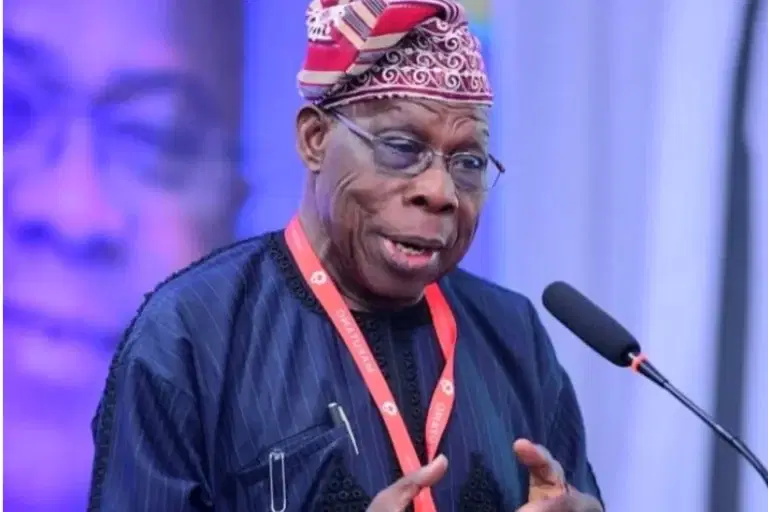

Former President Olusegun Obasanjo has revealed that sweeping labour reforms carried out during his tenure as military head of state were deliberately crafted to insulate Nigeria’s trade union movement from foreign manipulation at the height of the Cold War.
Obasanjo spoke in Abuja on Tuesday at the 85th birthday celebration and public presentation of the memoir of a former President of the Nigeria Labour Congress (NLC), Hassan Sunmonu. The event drew labour leaders, senior advocates, politicians and policy influencers, offering a rare window into the ideological battles that once shaped Nigeria’s labour space.
According to the former president, Nigeria’s labour movement in the 1970s was fractured along foreign ideological lines, with rival factions allegedly funded by the Soviet Union’s KGB and the United States’ CIA. He said such external influence posed a direct threat to national sovereignty and institutional independence.
At that point, Obasanjo said, decisive action became inevitable.
He explained that his administration resolved to establish a single, nationally driven labour centre that would be organised, controlled and funded solely by Nigerians. This conviction, he said, informed the labour and trade union reforms that eventually gave birth to the Nigeria Labour Congress.
To achieve this, Obasanjo said Justice Adebiyi was appointed to oversee the reform process, a move that initially attracted scepticism from labour leaders, including Sunmonu himself. Despite the doubts, the reforms were concluded, trade union laws were overhauled, and the NLC emerged as a unified platform for organised labour.
Obasanjo noted that, crucially, the government did not impose leadership on the new congress. Instead, workers freely elected their leaders, with Sunmonu emerging as the first NLC president.
Reflecting on the process, Obasanjo said he felt reassured that labour had asserted its independence without state coercion. He also disclosed that he privately encouraged Sunmonu to openly criticise his government after consultations, insisting that visible independence was essential for labour to retain the confidence of workers.
A key pillar of the reform, he added, was the introduction of a compulsory check-off system, which guaranteed steady union funding and eliminated dependence on foreign financial support.
Beyond the historical reflections, the event also served as a forum for contemporary labour debates.
Former NLC president and senator, Adams Oshiomhole, reaffirmed his lifelong commitment to organised labour, urging unions to remain proactive and disciplined in their engagement with the state.
Current NLC President, Joe Ajaero, used the occasion to express strong reservations about recent government policies, particularly aspects of the new tax regime. He argued that taxing the national minimum wage placed additional strain on workers and deepened poverty, describing such policies as regressive rather than progressive.
Ajaero also faulted the exclusion of organised labour from the Presidential Committee on Tax, warning that sidelining workers in policy formulation undermines trust and social stability. He raised concerns about Nigeria’s rising debt burden and called for structured, sincere engagement between government and labour at all levels.
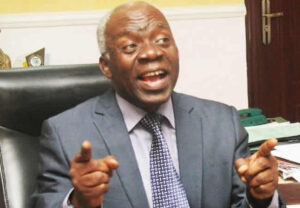
Human rights lawyer, Femi Falana, SAN, urged today’s labour leaders to draw lessons from Sunmonu’s principled leadership, especially at a time when a significant proportion of Nigerians are classified as multidimensionally poor.
The unveiling of Sunmonu’s memoir, Memoirs of an African Trade Union Icon: Organise, Don’t Agonise, became more than a celebration of personal legacy. It evolved into a broader reflection on Nigeria’s labour history and a sober debate on the future of workers’ rights, state policy and the enduring need for dialogue in a changing economic landscape.