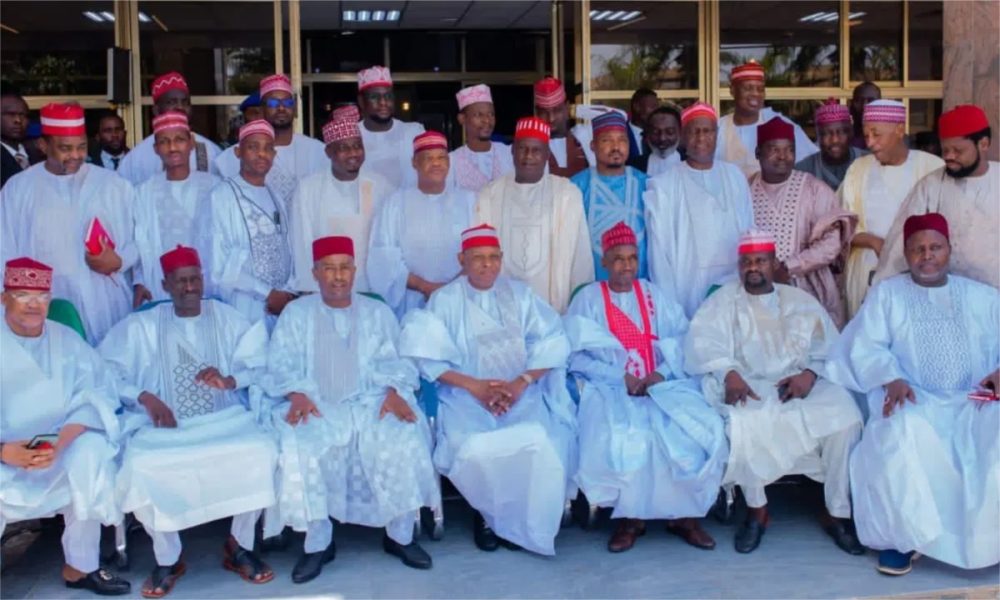

The political ground in Kano State shifted markedly on Monday as 21 members of the House of Assembly formally defected from the New Nigeria Peoples Party (NNPP) to the ruling All Progressives Congress (APC), further deepening the crisis within the opposition fold and strengthening the APC’s grip on the state.
The lawmakers announced their decision during plenary, citing what insiders described as irreconcilable internal challenges within the NNPP and a loss of strategic direction at both state and national levels.
Their defection comes on the heels of a mass movement at the grassroots, where about 774 members of the NNPP reportedly crossed over to the APC in Rimin Gado Local Government Area, signalling a broader realignment of political forces in the state.
The development is closely linked to the unfolding political drama around Governor Abba Yusuf, who recently resigned from the NNPP. The governor had blamed his decision on prolonged internal crises and legal battles that, in his view, had eroded party cohesion and weakened its national outlook. He is expected to formally join the APC later on Monday, a move analysts say could redraw Kano’s political map ahead of future elections.
Those who defected include some of the most influential figures in the Assembly: Speaker Jibril Ismail Falgore (Rogo), Deputy Speaker Muhammad Bello Butu Butu (Tofa/Rimin Gado), Majority Leader Lawan Hussain (Dala), Deputy Majority Leader Garba Shehu Fammar (Kibiya), Chief Whip Muddasir Ibrahim Zawachiki (Kumbotso) and Majority Whip Zakariyya Abdullahi Nuhu (Gabasawa).
Others are Lawal Tini (Ajingi), Musa Tahir Haruna (Albasu), Ali Lawan Alhassan (Bagwai/Shanono), Ali Muhammad Tiga (Bebeji), Hafiz Gambo (Bunkure), Rabiu Shuaibu (Dawakin Kudu), Tukur Mohammed (Fagge) and Murtala Muhammad Kadage (Garko).
Also on the list are Abdulmajid Isah Umar (Gwale), Engr. Ahmad Ibrahim (Karaye), Alhassan Zakari (Kura/Garun Malam), Suleiman Mukhtar Ishaq (Madobi), Abdulhamid Abdul (Minjibir), Muhammad Ibrahim (Rano), Kabiru Sule Dahiru (Tarauni) and Ali Abdullahi Manager (Wudil).
Political observers note that the scale and calibre of the defections underscore deep fractures within the NNPP, raising questions about its organisational resilience. For the APC, the influx represents a strategic consolidation, reinforcing its narrative of stability and capacity to absorb disenchanted political actors.