

’
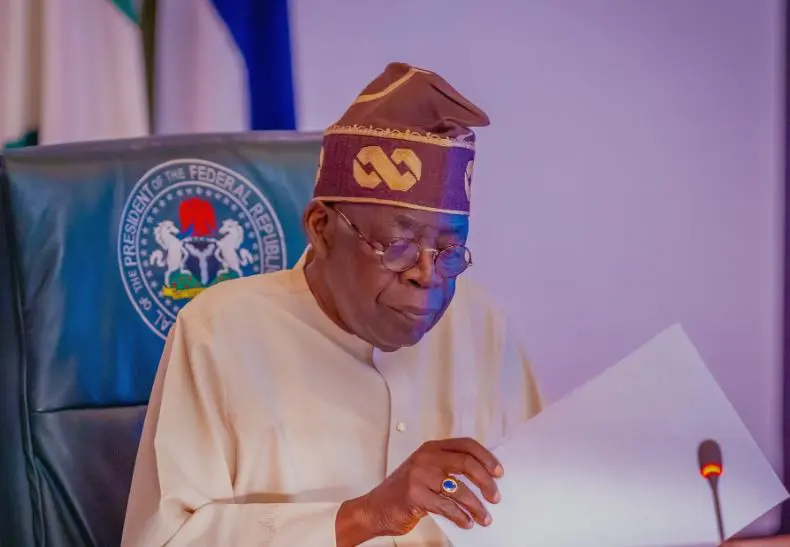
A fresh wave of political tension swept through the polity yesterday as opposition parties and the ruling All Progressives Congress (APC) locked horns over President Bola Ahmed Tinubu’s new set of ambassadorial nominees — the most extensive diplomatic shake-up since the withdrawal of all envoys from Nigeria’s foreign missions two years ago.
The President’s latest submission of 32 additional nominees to the Senate — bringing the total to 35 — has triggered a robust national debate, with the Peoples Democratic Party (PDP), African Democratic Congress (ADC) and New Nigeria Peoples Party (NNPP) sharply criticising the list as politically tainted.
The parties accused the President of offering plum diplomatic postings to allies and contentious figures, insisting that the nomination of former Independent National Electoral Commission Chairman, Prof Mahmood Yakubu, amounted to what they described as a troubling departure from established norms.
Diplomatic void finally addressed
The nominations come against the backdrop of complaints that Nigeria’s foreign missions have operated without substantive ambassadors since September 2023, following Tinubu’s directive recalling all envoys to reassess the nation’s diplomatic posture.
Despite security clearances for several prospective nominees being completed as early as April, the process stalled repeatedly, leaving missions reliant on chargés d’affaires. Presidency sources had hinted that the President would release the new list in phases — a prediction confirmed by the initial nominations of Ayodele Oke, Amin Dalhatu and retired Colonel Lateef Are to lead Nigeria’s missions in the United Kingdom, United States and France.
Fresh list heads to Senate
Special Adviser to the President on Information and Strategy, Bayo Onanuga, confirmed that the second batch of 32 nominees has now been forwarded to the Senate for expeditious consideration. The list comprises 15 career diplomats and 17 non-career nominees, including 10 women.
Notable non-career nominees include former presidential aide Reno Omokri; former INEC Chairman, Prof Mahmood Yakubu; former Ekiti First Lady, Erelu Adebayo; former Abia and Enugu governors, Okezie Ikpeazu and Ifeanyi Ugwuanyi; ex-Lagos Deputy Governor, Otunba Femi Pedro; former Oyo First Lady, Florence Ajimobi; former Aviation Minister, Femi Fani-Kayode; and Senator Jimoh Ibrahim.
Career diplomats listed include Enebechi Okwuchukwu (Abia), Yakubu Danladi (Taraba), Yvonne Odumah (Edo), Ambassador Shehu Barde (Katsina), Ambassador Muhammad Dahiru (Kaduna) and Ambassador Wahab Akande (Osun).
The envoys, once confirmed, will be deployed to strategic postings including China, India, South Korea, UAE, Canada, Qatar, South Africa and Kenya, as well as multilateral missions such as the UN, AU and UNESCO.
Opposition: ‘Yakubu’s nomination scandalous’
The PDP led the pushback, describing the list as “scandalous” and reflective of an administration unconcerned with Nigeria’s international reputation. Its National Publicity Secretary, Ini Ememobong, argued that nominating individuals facing public scrutiny undermined confidence in the government and dented Nigeria’s image abroad.
He maintained that Yakubu’s tenure attracted “widespread dissatisfaction,” suggesting that many Nigerians would interpret his nomination as a reward rather than a recognition of merit.
The ADC echoed similar sentiments. Its spokesperson, Bolaji Abdullahi, dismissed the list as a “job for the boys,” warning that many nominees might not be accepted by host countries before Nigeria’s next general elections due to lengthy diplomatic clearance procedures.
The NNPP also expressed concern, with its spokesperson, Ladipo Johnson, saying Yakubu’s appointment sent “the wrong signal,” especially so soon after presiding over a highly contested general election.
APC fires back: ‘Baseless and mischievous’
The APC countered the criticism with equal force. Its National Publicity Director, Bala Ibrahim, said opposition reactions amounted to “sheer mischief,” insisting that Yakubu’s nomination was legitimate and in line with democratic norms.
He argued that past electoral chiefs, including Prof Attahiru Jega, assumed public roles after office without attracting similar controversy.
“By nominating him, is he going to supervise elections abroad? He is to represent Nigeria, not a political party,” Ibrahim said.
He added that even if the appointment were viewed as a reward, “recognition for a job well done is not an offence,” stressing that Yakubu’s clean exit from INEC qualified him for further national service.
![[PHOTOS] Engr. Nurudeen Adeyemi Balogun Visits APC National Secretary](https://newsbulletin.com.ng/wp-content/uploads/2026/01/1769627828939-300x300.jpg)