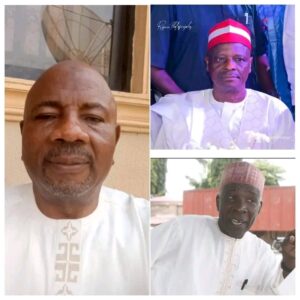
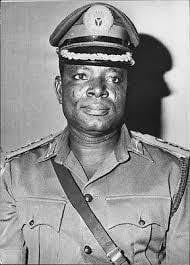

Nigeria has lost one of its most influential retired military officers and statesmen, Major-General Abdullahi Mohammed (retd.), who passed away in the early hours of Wednesday in Abuja. He was 86.
A native of Ilorin, Kwara State, the late General Mohammed was a respected figure in both military and political circles, remembered for his discipline, administrative acumen, and quiet influence in the corridors of power.
Confirming his passing, family sources described his death as “a monumental loss to the Ilorin Emirate, the nation, and the military establishment,” adding that he died peacefully around 1 a.m.
Born in 1939, Mohammed attended the prestigious Royal Military Academy, Sandhurst, in the United Kingdom, and was commissioned into the Nigerian Army in 1958. Over the course of his distinguished military career, he rose steadily through the ranks to become Director of Military Intelligence.
He was among the young officers who played a decisive role in the 1975 coup that ousted General Yakubu Gowon and installed General Murtala Mohammed. Shortly after the transition, he was appointed Governor of the defunct Benue-Plateau State, serving from July 1975 to March 1976.
His career in intelligence and security management peaked when he was named Director-General of the National Security Organisation (NSO) under General Olusegun Obasanjo’s military government—a position that later evolved into what is today known as the Department of State Services (DSS).
Following his retirement in 1979, General Mohammed devoted his time to private enterprise, heading Atoto Press Limited, a prominent printing outfit based in Ilorin.
However, his expertise in security management drew him back into national service in 1998, when then Head of State, General Abdulsalami Abubakar, appointed him National Security Adviser, a post he held until Nigeria’s return to civilian rule in 1999.
With the advent of the Fourth Republic, Mohammed became the Chief of Staff to President Olusegun Obasanjo, a position he retained under President Umaru Musa Yar’Adua until his resignation in June 2008. His tenure remains one of the longest in the history of that office.
Regarded as one of the nation’s most steadfast public servants, Mohammed’s style of leadership was understated yet effective. His contemporaries often credited him with helping to stabilise the Presidency during crucial periods of national transition.
In a tribute, the Ilorin Emirate Descendants Progressive Union (IEDPU) described his passing as “a heavy blow to the Ilorin Emirate and Nigeria as a whole.”
A statement issued by the Union’s National Publicity Secretary, Nurudeen Ibrahim, on behalf of its National President, Alhaji Abdulmumini Abdullahi, extolled the late general’s contributions to national unity, service, and community development.
“General Mohammed was a patriot of rare calibre,” the statement read. “He was the first son of Ilorin to serve as a state governor and the first to attain the rank of Major-General in the Nigerian Armed Forces. His life was defined by loyalty, modesty, and devotion to the ideals of public service.”
The IEDPU recalled that Mohammed’s support for community initiatives was unwavering, citing his consistent sponsorship of the Union’s annual calendar production at no cost.
The body extended its condolences to President Bola Ahmed Tinubu, former Presidents Olusegun Obasanjo and Abdulsalami Abubakar, Kwara State Governor AbdulRahman AbdulRazaq, and the Emir of Ilorin, Alhaji (Dr) Ibrahim Sulu-Gambari, praying that Almighty Allah grants the late general eternal rest and comforts his family.
Major-General Abdullahi Mohammed’s passing marks the end of an era for Nigeria’s military and political elite—a life defined by service, sacrifice, and a steadfast commitment to the unity and stability of the nation.