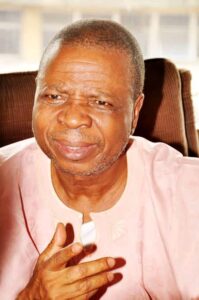


A member of the Senate Committee on Anti-Corruption, Senator Peter Nwaebonyi, has said the fight against corruption in Nigeria can only succeed if the Economic and Financial Crimes Commission (EFCC) continues to operate independently, without political interference.
Speaking with journalists on Tuesday, Nwaebonyi described the EFCC’s operations as a “game governed by rules and facts,” stressing that every allegation of graft must be properly investigated before conclusions are drawn.
“Law is a game, governed by rules and facts. So if somebody brings up a petition that a politician has embezzled a certain amount, it is left for the EFCC or any other agency doing the investigation to confirm whether that allegation is true or not,” he said.
According to him, the EFCC has maintained professionalism and fairness in its approach to high-profile investigations. “EFCC is doing a good job. We are not dictating for them. They are a bit independent in their investigation,” the senator added.
Nwaebonyi urged anti-graft agencies to regularly update the public on cases where there is no prima facie evidence, saying such transparency would help dispel the notion that all politicians are corrupt.
“Most of these high-profile cases that have no prima facie case against such individuals should be made public, so that Nigerians will not say all politicians are thieves. We still have good leaders who are out to set things right for the development of this country,” he stated.
Newsbulletin Nigeria reports that the Presidency had on October 16 commended the EFCC for what it described as an “outstanding transformation” in its two-decade existence.
The Special Adviser to the President on Policy and Coordination and Head of the Central Results Delivery Coordination Unit, Hadiza Bala Usman, gave the commendation during the presentation of the Commission’s Performance Charter to the EFCC Chairman, Mr. Ola Olukoyede, at the agency’s headquarters in Abuja.
“You should all be proud of yourselves, seeing your trajectory,” Usman said. “Some of us have been observing the EFCC journey for a long time, and I just want to say that collectively your staff and the organisation should be very proud of what has been built in these years.”
She noted that the EFCC had evolved into one of the most dynamic public institutions in Nigeria, adding that its growth from inception in 2000 to date remained “a model for institutional resilience and reform.”