
The Human and Environmental Development Agenda (HEDA Resource Centre) has asked the Federal Government to publish the full list of beneficiaries of the ₦330bn reportedly disbursed to poor Nigerians through the National Social Safety-net Coordinating Office.
The organisation’s demand comes on the heels of Finance Minister and Coordinating Minister of the Economy, Wale Edun’s disclosure that the government had commenced cash transfers under an $800m World Bank facility aimed at cushioning the impact of the fuel subsidy removal and rising inflation.
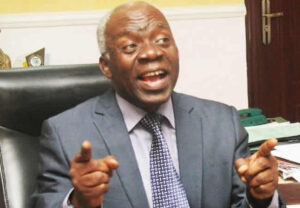
In a statement signed on Sunday by its chairman, Olanrewaju Suraju, HEDA welcomed the idea of social protection for vulnerable citizens but faulted the government for what it described as a lack of transparency and accountability in handling public resources.
According to Suraju, the claim of disbursing ₦330bn “raises more questions than answers.” He insisted Nigerians deserve to know the names of the beneficiaries, how they were selected, and a clear breakdown of the funds disbursed.
“Public funds, whether raised internally or sourced from development partners such as the World Bank, must be managed with the highest level of openness,” Suraju said.
HEDA warned that without a verifiable list of recipients, the cash transfer scheme could be hijacked by corruption, political patronage, or manipulation. It recalled past controversies that trailed similar interventions under former Humanitarian Affairs Ministers, Sadiya Umar-Farouq and Betta Edu.
The group demanded that the Ministry of Finance provide details of beneficiaries, their locations, and evidence of disbursement, stressing that only transparency would convince Nigerians that the funds truly reach the intended poor and vulnerable groups.
“Accountability is non-negotiable. Nigerians must not be subjected to another round of ghost beneficiaries or politically handpicked names,” Suraju added.
HEDA also urged that future allocations for social protection programmes be subjected to open scrutiny by civil society organisations, the media, and the public, in line with international best practices.
The group reaffirmed its commitment to monitoring social intervention spending, stressing that such initiatives should genuinely target the poorest Nigerians rather than serve as a political tool or avenue for looting.