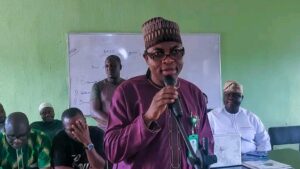
BEING A PAPER PRESENTED AT THE MAIDEN NATIONAL CONFERENCE OF OFA YOUTH COUNCIL ON SUNDAY, JULY 2ND 2023 AT THE OFA DESCENDANTS’ UNION (ODU) HALL, OFA BY OLAYEMI M. OLABOYE (ITAFA).
I thank the organisers of this maiden conference of the Ofa Youth Council for considering me worthy to speak at this historic event. It is both a personal honour and a nostalgic moment to stand before you here this morning; it brought back the memories of thirty-five years ago when I stood in this same venue to read the Resolutions of the then Ofa Youths Movement (OYM) as the Protem Secretary. On that historic occasion, we had resolved among other decisions taken to wrest the political power of the then Oyun Local Government Area from the elders. That movement, led by the late Moshood Ogunrotimi (Roti) birthed the chairmanship of Honourable Hassan Oyeleke and the subsequent ‘youth’ chairmanship of the later created Ofa Local Government.
The topic I have been asked to speak on is complex, tricky and inexhaustible. How do I begin to talk about a kingdom that has been in existence for about seven hundred years in addition to the contributions of the indigenes to its development for the same number of years under 20 minutes? It is not a subject that could be exhausted in a single forum. However, to navigate these landmines embedded in this tricky topic, I have taken the liberty to tinker a bit with the topic by replacing sons and daughters with indigenes (the difference will be clearer as we go on in this paper).
While going through my private library in preparation for this paper, I discovered that the topic Ofa: Yesterday, Today and Tomorrow had been previously and copiously spoken to by two prominent Offa personalities, both of them lawyers. First, Uncle Ayo Opadokun spoke on this topic on 2nd October 2015 on the occasion of 80th anniversary of Ofa Descendants Union (courtesy of ODU Lagos Branch); secondly, Lawyer Wahab Shittu (SAN) on 2nd December, 2017 on the occasion of Ofa Day by the ODU Abuja branch. Both speakers have made my job easier today although I will be looking at the topic from another angle entirely. I do not intend to bore you with too much details of what the topic entails therefore I have classified this paper into the following broad headings.
The ancestral figures
Education
Commerce/Industry
Politics and Governance
Law
Health
Military/Paramilitary
Religion
Entertainment
Sports
I will hide under these ten classifications to attempt to mention just a fraction of those who had played one role or the other in community development in the history of Ofa. Let me apologise ahead that this paper is not, cannot and must not be used as the roll-call of our heroes and heroines. Doing so will be a disservice to the labour of these great men and women. What I have done here is to take samples from different areas of influence and I also made attempts to limit the names as much as possible to those who are no longer alive (after all baoku ise o tan). There is no way I can mention all of those names even if I have a month to deliver this paper.
The Ancestral Figures
Iba! I pay homage to our common patriarch, our progenitor in Ofa, Olalomi Olulakun Olukitibi Olofagangan who strove very hard and faced many daunting obstacles to ensure he bequeathed to us Ofa town and planted the seeds of community development that is today the envy of everyone. I extend my reverence to all those who had sat on the exalted throne of Ofa after Olalomi till date and personages who assisted them to administered the town during their various reigns. I acknowledged the historical role and the fame of Omowumi – the one popularly known as Moremi Ajasooro.
I recognised the valiant Ajayi Areonibon (Balogun Asegbe) and the gallantry of Ofa army with the like Salako Lalemi (Osi Apabiekun, Wande Ojo Kure, Aare Beribepo, Atolowotele, Adegoroye and others who staked their lives to defend Ofa territorial integrity. Mention must be made of the foresight of Oba Oyeniran Ariwajoye I in whose reign the railway track was laid into Ofa; a single developmental project which put Ofa on the global map even before some towns and cities which are today state capitals. It was also in his reign that Ofa town and her monarch was once again recognised as a sovereign with a staff of office between 1907 -1915. Of course, it was also during his glorious reign that the seed of education was sown in Ofa with the establishment of the St. Marks School. The pioneering efforts of Oba Olabisi Oyedotun Esuwoye I (1926 -1936) in changing the palace roof from dried grasses to corrugated iron sheets.
The actual foundation of modern Ofa developmental stride was laid during the epic reign of Oba Yusuf Wuraola Isioye (1937 – 1969). His reign witnessed the formation of the iconic Ofa Descendants Union (ODU) in 1935, a union which is the multipurpose vehicle that has conveyed Ofa to her enviable position today. This great union has been the harbinger of developmental projects such as township roads, electricity, hospital, and most importantly the flagship project – the Ofa Grammar School (OGS) in 1943.
I must not leave this section without due recognition of Olofa Mustapha Olawore Olanipekun Ariwajoye II (1970 -2010) for building on the solid foundation laid by his predecessors. His reign witnessed accelerated infrastructure growth especially the establishment of the Federal Polytechnic Ofa in 1992 and Ofa was made a single town local government area in his reign. Also of significance was the re-attainment of the first class status for Olofa throne – a feat also achieved by his grandfather Olofa Ariwajoye I.
It will be a disservice to my own forefathers if I failed to mention the strategic and divine role played by Eesa (prince) Ajibola Igbaroola (1747 -1845) in the emergence and subsistence of the Ofa royal throne as it is today.
Education
After paying obeisance to the ancestral figures, it is only natural that the next segment should be education which has been ascribed as our industry in Ofa. The planter of western education in Ofa was Bishop A.W. Smith with the establishment of St. Marks Primary School in 1912 (as the first of such in the old Ilorin Province). That seed germinated to inspire other academic institutions such as:
St. Cyprian Primary School 1921 (Catholic)
Ogidiri Primary School 1924 (African Church)
First Baptist Primary School 1932 (Baptist)
Wesley Primary School 1934 (Methodist)
Iyeru Okin Primary School 1945 (Anglican)
Anglican Girls School 1956 (later metamorphosed to St. Clares Anglican Girls Grammar School in 1963)
Anglican Teachers College 1957 (this was moved to Ilorin in 1961 and named after Bishop A.W. Smith).
Ofa Community Girls School 1967 (later handed over by the ODU to the Anglican Mission and renamed Anglican College of Commerce)
Mention must also be made of the efforts of the Muslim societies like Ansar-ud-deen, Nawair-ud-deen, Tawakalitu, FOMWAN and Anwar-ul-Islam in the establishments of various Islamic schools both at the primary and secondary levels culminating in the siting of Summit University in Ofa by the Ansar-ud-deen society.
Mr. J.O.S Onawola (from Ile Alagure) claimed the trophy as the first registered pupil to attend a school based in Ofa while Mr. John Awotunji Oyeleke (of Ile Asalofa) took the garland as the first indigene to serve as the Headmaster of St. Marks Primary School in 1917.
It is not anomalous for Reverend R.N. Ludlow to come first on the list of contributors to education advancement in Ofa especially in the formation of the famous Ofa Grammar School (OGS) of which he was the first Manager. Closely followed by the first university graduate in Ofa – Mr. Augustus Bandele Oyediran (Ile Ologiri), the first African Principal of Methodist Boys High School Lagos and the first General Secretary of Ofa Descendants Union who lent his wealth of intellect and experience to the school during its gestation period. The monetary and intellectual contributions of the following people to the progress of education cannot be quantified: Pa John Opaleke, Pa J.O.S. Onawola, Rev. J.B. Olafimihan (the first indigene to be principal of OGS), Pa Solere, Pa J. Olatunji, Alhaji Sani Giwa Ilesanmi, Alhaji Bello Ajibade Jato, Alhaji Aliyu Onaolapo Olatinwo, Alhaji Gbadamosi Adeyemi Ijaiya, Mr. John Awotunji Oyeleke and all the 351 donors for the offtake of OGS in 1943 among others will remain indelible.
The pioneering efforts of Chief (Mrs) Felicia Adeola Adesiyun in the establishment of the first private primary school (Adeola Model School in 1960) and Chief Emmanuel Adesoye who gave Ofa a world-class private secondary school cannot be forgotten. Others who belong to the pantheons of education temple are Alhaji Sakariyah Moradeyo Dolapo, Architect Dejo Omotosho, Alhaji Tiamiyu Olatinwo, Prince Yunus Abioye Oyeleke, Prince Michael Olarinoye Popoola (Baba Teacher), Pa Nathaniel King Olawoyin, Chief Morohunfola and the latest to join them – Professor Jamiu Mosobalaje Olaloye Oyawoye.
We remember with accolades the brains behind the founding of Olalomi Comprehensive College in 1979 and those who assisted with funds and infrastructure for its take-off by providing all the 35 buildings required (Alhaji Karimu Olagunju Ile Aade provided the coaster bus, Dr J.D. Soleye donated the clinic, Prince Yunus Abioye Oyeleke (library), Alhaji Yusuf Giwa (admin block), Alhaji Sani Aba Balogun, Alhaji Tiamiyu Olatinwo, Alhaji Bello Asunmo Agunbiade, Alhaji Yusuf Adebayo, Pa Amosun, Chief Adesoye and others donated a block of classroom each).
Similarly, the four High Chiefs of Olofa Olawore Ariwajoye II who embraced and gladly accepted to host the four newly established secondary schools in 1981 (Moremi High School, Iyeru Grammar School, Okin High School, Ofa Community Grammar School).
I must not end this segment without mentioning the first set of public letter writer in Ofa – Pa Ojo Soleye (Baba Letter writer) of Ile Eejisun and Pa James Agboola of Ile Aponbi. Both of them held forth and filled the communication gap until the literacy level improved in Ofa. We thank them for their contributions.
The Ofa of today has made a huge leapt in educational advancement; between 1912 and 1962 Ofa had 10 primary schools and only 4 secondary schools. Today, the town can boast of over 50 public primary schools, 30 public secondary schools, 544 private secondary schools, 108 private secondary schools, and 12 tertiary institutions. Alhaja Raliat Oyenike Sanni (nee Oyeleke) blazed the trail in girl-child education as the first female university graduate in Ofa. Ofa today is knocking on the doors of the Guinness World Records as the single town with the highest number of professors; about 10 of them have held the position of Vice Chancellors in various universities.
Commerce
The quartet of Alhaji Sani Giwa Ilesanmi, Alhaji Bello Ajibade Jato, Alhaji Aliyu Onaolapo Olatinwo, Alhaji Gbadamosi Adeyemi Ijaiya blazed the trail in the art of commercial trading in Ofa. These four noble men with others like Alhaji Bakare Adeyemi Alata, Alhaji Ilufoye Shittu Igbaja and Alhaja Saadatu Adebola Oyeleke (the first Iyalaje of Ofa), Abudu Ibiyeye (Foreman) of Ile Yeemi who once donated new Peugeot 504 cars to the then four High Chiefs and the Chief Imam, Alhaji Amukude, Mohammed Lawal (Central), Tiamiyu Olowookere Balogun, the Agunbiade brothers, Suaibu Adebiyi Kure, Suleiman Salawu (Thomade bookshop), Alhaji Kareem Olagunju (Ile Aade), Chief S.A. Bukoye (Iyeru Okin), Alhaji Busari Oladipo, the Olatinwo brothers, Alabi Universal, Chief Emmanuel Olatunji Adesoye (Okin biscuits etc.), Alhaja Rabiat Dundu, Alhaji Oseni Olanrewaju, Alhaji Mohammed Adeshina Tolani, Dr. Femi Adekanye, Alhaji Kola Busari and Chief J.S. Olawoyin pioneered modern commercial trading and manufacturing industry in Ofa and making a success of their chosen vocations.
Their efforts gave Ofa the commercial goldmine that is the Owode Market today. Among these named people also got Ofa a number of firsts such as petrol station, public transportation, hotels, bakeries, foundries, confectioneries, bookshops, supermarkets and depots for brands such as CFAO, GB Olivant, Patterson Zocchonis, Lever Brothers, UAC, etc.
The foundation for commerce and industry laid by these great investors had turned the major Olofa Way into the commercial hub of Ofa. It is therefore gratifying that the Ofa of today has transcends the previous status and the hitherto Central Business District can no longer accommodate the influx of commercial ventures that throng the town. The town, today, can boast of virtually all the modern outlets for various needs – banks, eateries, gas plants, boutiques, event centres, GSM shops etc.
Politics and Governance
We cannot talk about this segment without first paying obeisance to the group of agitators and activists that fought relentlessly for the emancipation of Ofa and restore her old glory as a prominent town in Yoruba land under the banner of Ofa Descendants Union (ODU) namely:
Amos Bilewu – ile Eeso oke
James Olafimihan – ile Olomi
Samuel Akintoye – ile Gedegbe
Moses Oyetoke – ile Alagure
S.O. Oyawoye – Ile Elemoso
J.A. Oyawoye – Ile Elemoso
Theophilus Olanrewaju – Ile Oloi
J.A. Awojobi – ile Eeso
Joseph Oyebanji – Ile Afobaara
Jimo Bukoye – Ile Otenuadieboko
S.O. Roberts – ile Opepe
Abraham Adesoye – Ile Ola Isale
Raji Aina
Yusuf Agboola
Anjorin Lawal – ile Agbopa
Yusuf Alalukurani – ile Saawo Elerin
Busari Alabi – ile Agbopa
James Awojobi – ile Gedegbe
Buraimo Moradeyo – ile Aba
Salami Olagunju –
Gbadamosi Omowale – ile Gbanifa
Shittu Adeyi – Ile Odiwo
Ezekiel Olaegbe
Salami Tejumola
Sunmonu Adedeji – ile Asanlu
S.B. Ibiyeye
Particular mention must be made of the very first National President of ODU, Pa William (Waidi) Adedoyin (who hailed from nearby Igbonna) for his sacrifices to ensure Ofa was liberated. Another name that must not missing in this segment was Chief Josiah Olawoyin (the first Asiwaju of Ofa) who served meritoriously as the pioneer Administrative Secretary of ODU. He was to date, the most visible person in the field of politics. In this league was Alhaji (Hon) Sani Giwa Ilesanmi who also represented Ofa at the legislative house in Kaduna, his friend Alhaji Gbadamosi Ijaiya, Chief Jimoh Olaoye Anibilowo Shittu, the first executive Deputy Governor of Kwara State. Alhaja Banke Badmus (the first Omolojuoba of Ofa), Alhaji Jimoh Saawo Omoluabi, Alhaji Adefioye, George Ademola Ogunniyi, Alhaji Yahaya Balogun, Alhaji Usman Fodio, Alhaji SOK, Alhaji Akere, Alhaji Raimi Asaba, Alhaji Saka Jaisa, Alhaji Oyus Popoola and Senator Suleiman Salawu (Thomade).
In this class are Ambassador Saka Tunde Oyeleke (former Ambassador to Russia), Ambassador Ogundele and others.
Law
In the field of Law, Ofa people have made their marks either on the bench, the bar or in the academics. Notable names in this segment will be Lawyer Joseph Oyewale Ijaodola (a grandson of Olofa Adegboye), Justice James Moradeyo Adesiyun (a former Chief Judge of Benue State), Justice Emmanuel Adebisi Adegbite, Alhaji Murtala Adebayo Sanni SAN (the first SAN from Ofa), and Chief J.O.A. Shittu. The bar has been raised in the Law profession in the Ofa of today with the number of SAN recipients rising to 7 (Lawal-Rabana, Akeem Afolabi, Soji Oyeleke, Rasheed Ijaodola, Wahab Shittu and Oladipo Tolani).
The bench is also looking good for the town as it keeps producing judges and justices in various court levels with the likes of Justice Banji Orilonise, Justice Moshood Oredola (Rtd), Justice Yemisi Ajayi, Justice Folashade Ojo (Nee Adesiyun), Justice Adegbite, Justice Olanipekun, Chief Registrar Olawoyin and many Chiefs Magistrate, Magistrates and Khadis. The academics is bustling with over 100 law lecturers among whom are no less than 20 professors.
Today, Ofa has jumped from the local District Court to having a High Court, Area Court, Magistrate Court and a parole centre.
Health
There is no better way to capture the story of healthcare development in Ofa than the fact that the very first baby to be born in a maternity by an Ofa based mother, Banji Oyawoye did not only survive but went on to become a medical doctor establishing his own successful practice in Osogbo. Again, Dr Jonathan Durojaiye Soleye (Ile Eejisun) was the first medical doctor produced by Ofa (the second in the old Northern Region) went on to be the first African to serve as the Medical Officer at the Ofa General Hospital from February 1959 to June 1959.
Names of personalities such as the foremost Gynaecologist, Dr. Kolawole Adeniyi Olafimihan of the Olalomi Hospitals (Ilorin & Ofa), Chief (Mrs) Ayobola Afolabi Akinwande (alias Iya Ayo) a trained nurse/midwife and one of the earliest educated females in Ofa was a pioneer staff of Ofa General Hospital in 1948. She established the first private maternity home in Ofa in 1953. She was honoured with the Iya Abiye chieftaincy title in 1971. Alhaja Wulemot Aduke Bammeke another trained nurse (SRN 1965) who was a pioneer staff at the Ofa Infants Welfare Clinic (Olomowewe) in 1969. Alhaja Bammeke established the second private maternity clinic – Omolere Maternity Nursing Home in 1970. She was honoured with the Otun Iya Abiye title in 1985. The pioneering efforts of others like Iwalewa Maternity Clinic, Nurse Agbo, Nurse Shogo, Dr Afolabi (Afolabi Hospital), Dr Omojasola, Dr Jatto, Dr Tijani (Tawakalitu Clinic), Dr Gani Felixson (Unity Hospital), Dr Olanipekun, Dr Wale Clinic, Professor Bamdipo (ABUTH), Akande X-ray & Diagnostic centre in providing healthcare for our people are validly recognised. While Professor A.B. Oyediran (UCH), Professor Waheed Olatinwo, Dr Funsho Rabiu Oladipo, Dr (Mrs) Sidikat Folorunso, Dr. Olanrewaju, Dr. Abdurahman Hamkad, Dr Mudashir Bello, Dr Rashid Jimoh, Dr. Abdulakadir etc led the current medical crusade in the healthcare of Ofa.
Military/Paramilitary
This segment will start with due obeisance to those who laid down their lives in the service of Ofa sovereignty. Some of them have been mentioned in the course of this paper. They remain our heroes and heroines. The likes of Brigadier-general Oyelola (medical corps), Colonel (later Brig-Gen) Toki who gave his name to a section of the town as a result of building in that axis. Air Commander Hamid Bayo Lawal – the first military pilot from Ofa who went on to become the Military Administrator for Benue State (1978) and later member of the Armed Forces Ruling Council (AFRC – 1985) and Minister for Social Development, Youth and Sports (1986-1989). Group Captain Salawudeen Adebola Latinwo who became the military governor of Kwara State. In the police, Ofa people have excelled and served in various capacities in their respective careers. AIG Remi Opadokun rose to be the Commissioner of Police in charge of Mobile Police among other high ranking officers (serving and retired) in other paramilitary agencies.
Ofa has also grown from its past position as twice host to military formations (the Burma FOB at the Adesoye College site & the Army Barracks at Itafa area) to having today, the Navy School of Medical Sciences, the Area Commands of both the Nigeria Police and Civil Defence Corps as well as the Federal Fire Service formation, FRSC base, Immigration base, NDLEA base and the Correctional Service base.
Religion
Needless to say that the traditional religions were present all along right from the founding of Ofa. The people practiced the common traditional worshiping of deities such as Ogun, Sango, Obatala, Esu, Orisaoko and Onimoka (the communal deity). Of course, Egungun (masquerades) such as Layewu, Alapansanpa, Okuroro, Awodegbo, Arenugbongi, Erinogo, Pajepolobi, Lekeleke, Alagbo and Ewule were regular spectacles in Ofa during the Egungun season.
However, Christianity and Islam came much later in the existence of the town. The name of Reverend (later Bishop) A.W. Smith will resonate as the man who introduced Christianity to Ofa from Osogbo in 1907 which culminated into the establishment of St. Marks Church in 1909. Islam came a bit earlier perhaps due to the contact with itinerant traders from Mali, Sudan and the far north of Nigeria.
Ofa has since grown in leaps and bounds in the progress of these two latter religions to the detriments of the traditional ones. From one church in 1909, Ofa of today according to available data has over 750 churches of various denominations. Similarly, from the Aranmokanla mosque in 1910, records show that Ofa today now have over 500 mosques both private and public out of which about 50 are Jumaat mosques.
The names of veterans like Alhaji Lawal Atoyebi Dundu, Alfa Momodu Alabi (alias Alhaji Popo) the first Ofa person to perform pilgrimage to Saudi Arabia was an Islamic teacher, preacher, poet and a judge. The quartet of Giwa, Ijaiya, Jatto and Olatinwo also have a place here with others like Pa Jimoh Naibi, Alhaji Dundu, Alhaji Bakare Keji, Alhaji Lawal Onawola (Baba Isale) and all other donors towards the building of the Ofa Central Mosque.
Efforts of such personages like Alfa Sanusi Ambe Ayegbami, Sheikh Samsudeen Amao Bulala, Alfa Olose, Alfa Keke, Alfa Nla, Alfa Sakariyah Imam, Mufasir Giwa Ilesanmi, Arowasi Jimoh Balogun, Naibi Mejiosu, Alfa Salman Oseni and of course all the Chief Imams of Ofa and organisations such as Ansarudeen, Nawairudeen, Anwar Islam, Tawakalitu, FOMWAN should be recognised at this point.
Due recognition must be given to His Grace Baba Aladura Worldwide Samuel Ogunleke Kalejaiye, the second General Overseer of the Cherubim & Seraphim Movement Church whose remains was buried here in Ofa. Imam Tajudeen Adigun, Chief Imam Muyideeen Salman Hussein, the Adegboye brothers are still making waves in their fields and lifting the name of Ofa among other notable clergymen.
Entertainment/Sports
Entertainments in the Ofa of yesterday was chiefly from drummers (Ayan), bards (akigbe/alagbe), Egungun (masquerades), Alo (folklores), Orin (songs), Oriki/Esa (ballads) and others while the traditional games included among others ijakadi/Eke (wrestling), mude-mude, fami-n-fae (tug-of-war), Ayo Olopan, Okoto, Ifo (high jump), Bojuboju (hide and seek). Most of these entertainments and sports are fitted for the traditional Yoruba extended family settings where children sat in the moonlight around the elders to listen to folklores or engaged in their own independent games. The heroes of these games are the departed and fast depleting club of aged grandparents. Others are Alasi odu, Muda Oba, Ojolowo baba n Taju, Agoji, Pespsi Orlando, Nasiru Alowoesin, Ojurabesa, Amuda Onilu, Ojo Onilu. The likes of Alhaji Popo can be classified into this group as his waka (poetic songs) even appealed to more people that thronged his waasi (sermons). It was a veritable source of the latest ditty in town.
Today, when we all sing ‘Ofa o, aiye ile Ofa o’, Chief Ahmed Olaoye who composed the meaningful and melodious Ofa Anthem must be remembered. Again, Professor Oyawoye came to fore for giving Ofa its distinct flag and sartorial identity in the popular Ofa Mesi cap and gele. Some of our compatriots had represented Nigeria at the global sports meets; names like Sarafa Salami (goalkeeper for U17 at Canada 1987); Mukaila Gbadamosi a gold medal winner at the World Paralympic among others must be mentioned.
As I hinted at the beginning, this topic is endless but let me try to end with this anecdote. From the reign of Olofa Olumorin Anilelerin, Ofa kings were prevented from adorning their crowns by the Fulani oligarchy. In order to preserve these ancestral crowns, the main totems on those crowns were detached and given to the Ewule masquerades for safe keeps. Similarly, prior to the ascension of Olofa Esuwoye II there were lot of misgivings about the position and continuous existence of the memorabilia for Moremi. The current Olofa was able to found a way round it and today in place of the old Moremi memorabilia stands a modern edifice that is the Moremi Hall of fame. Furthermore, the hitherto abandoned Onimoka festival has metamorphosed into the Ijakadi Festival in a modernised form.
Before I take my seat, I will like to make a recommendation that an alignment of the Ofa yesterday and the Ofa of today will give us the desired Ofa tuntun of tomorrow.
Thank you for listening.

![[PHOTOS] Offa Students Union N/HQ Secures 40 Slots In MOK Foundation’s 2026 JAMB Scholarship](https://newsbulletin.com.ng/wp-content/uploads/2026/02/1770395610721-300x300.jpg)